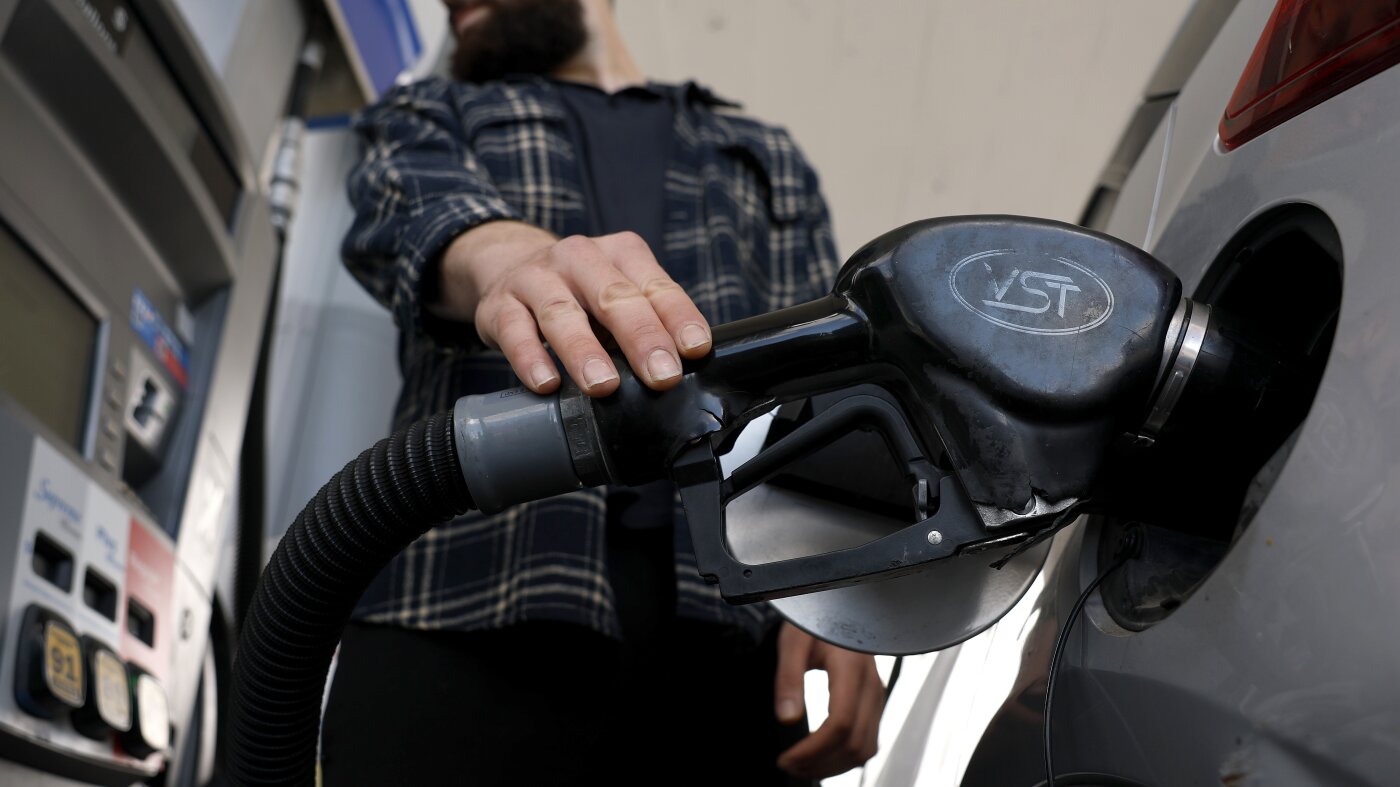
key insights We offer investors structured insights into stock trends driven by earnings and market activity. With the national average for a gallon of gasoline reaching $4.55 as the U.S. enters one of the busiest travel weekends of the year, consumers are seeking effective ways to reduce fuel costs. Options range from adjusting driving habits to considering electric vehicles or simply reducing travel, reflecting a broad search for savings amid elevated pump prices.
Live News
key insights Professionals often track the behavior of institutional players. Large-scale trades and order flows can provide insight into market direction, liquidity, and potential support or resistance levels, which may not be immediately evident to retail investors. Economic policy announcements often catalyze market reactions. Interest rate decisions, fiscal policy updates, and trade negotiations influence investor behavior, requiring real-time attention and responsive adjustments in strategy. The national average price for a gallon of regular gasoline stands at $4.55, according to the latest available data, as Americans prepare for the Memorial Day holiday travel period—traditionally one of the heaviest driving weekends. This price level represents a significant increase from prior years, prompting drivers to explore methods to cut fuel expenses. Common recommendations include reducing highway speed, as aerodynamic drag increases with speed and fuel efficiency typically declines above 50 miles per hour. Maintaining proper tire pressure, removing excess weight, and using cruise control on flat terrain can also contribute to modest gains in miles per gallon. For those with access to public transit or the ability to carpool, reducing total miles driven offers the most direct savings. Another option gaining attention is the shift toward electric vehicles (EVs). While upfront costs remain higher than conventional cars—and charging infrastructure varies by region—EVs can offer lower per-mile fuel costs, especially when charged at home during off-peak hours. For some households, avoiding non-essential trips entirely may be the most practical short-term measure, particularly if budgets are stretched by higher fuel prices. The driving tips and alternatives discussed in the original segment reflect a broad effort by consumers to adapt to elevated pump prices, though individual results may vary based on vehicle type, driving conditions, and local fuel costs.
Navigating High Gas Prices: Strategies for Cost Savings as National Average Hits $4.55 Evaluating volatility indices alongside price movements enhances risk awareness. Spikes in implied volatility often precede market corrections, while declining volatility may indicate stabilization, guiding allocation and hedging decisions.Understanding cross-border capital flows informs currency and equity exposure. International investment trends can shift rapidly, affecting asset prices and creating both risk and opportunity for globally diversified portfolios.Navigating High Gas Prices: Strategies for Cost Savings as National Average Hits $4.55 Scenario-based stress testing is essential for identifying vulnerabilities. Experts evaluate potential losses under extreme conditions, ensuring that risk controls are robust and portfolios remain resilient under adverse scenarios.Historical precedent combined with forward-looking models forms the basis for strategic planning. Experts leverage patterns while remaining adaptive, recognizing that markets evolve and that no model can fully replace contextual judgment.
Key Highlights
key insights Analyzing intermarket relationships provides insights into hidden drivers of performance. For instance, commodity price movements often impact related equity sectors, while bond yields can influence equity valuations, making holistic monitoring essential. Professionals emphasize the importance of trend confirmation. A signal is more reliable when supported by volume, momentum indicators, and macroeconomic alignment, reducing the likelihood of acting on transient or false patterns. The key takeaway from the elevated gas price environment is the potential for a shift in consumer behavior, which could have downstream effects on the broader economy. Higher fuel costs may reduce discretionary spending in other areas, as households allocate more of their budgets to transportation. This pattern is often observed when gasoline prices spike around major travel holidays. For the automotive industry, sustained high prices could accelerate interest in fuel-efficient vehicles, hybrids, and EVs. Automakers that have been investing heavily in electrification may see increased attention from cost-conscious buyers, though adoption rates would also depend on charging infrastructure and vehicle availability. Conversely, demand for large, fuel-inefficient vehicles could soften in the near term. From an energy perspective, the $4.55 national average signals tight supply-demand dynamics in the oil market. Refinery capacity constraints, geopolitical tensions, and seasonal demand all contribute to the price level. While individual drivers cannot control global supply, their collective response to high prices—such as reducing miles traveled—could modestly affect overall gasoline consumption, potentially influencing future price trends.
Navigating High Gas Prices: Strategies for Cost Savings as National Average Hits $4.55 Seasonal and cyclical patterns remain relevant for certain asset classes. Professionals factor in recurring trends, such as commodity harvest cycles or fiscal year reporting periods, to optimize entry points and mitigate timing risk.Market anomalies can present strategic opportunities. Experts study unusual pricing behavior, divergences between correlated assets, and sudden shifts in liquidity to identify actionable trades with favorable risk-reward profiles.Navigating High Gas Prices: Strategies for Cost Savings as National Average Hits $4.55 Combining qualitative news analysis with quantitative modeling provides a competitive advantage. Understanding narrative drivers behind price movements enhances the precision of forecasts and informs better timing of strategic trades.Real-time monitoring of multiple asset classes allows for proactive adjustments. Experts track equities, bonds, commodities, and currencies in parallel, ensuring that portfolio exposure aligns with evolving market conditions.
Expert Insights
key insights Stress-testing investment strategies under extreme conditions is a hallmark of professional discipline. By modeling worst-case scenarios, experts ensure capital preservation and identify opportunities for hedging and risk mitigation. Cross-market correlations often reveal early warning signals. Professionals observe relationships between equities, derivatives, and commodities to anticipate potential shocks and make informed preemptive adjustments. The national average price for a gallon of regular gasoline stands at $4.55, according to the latest available data, as Americans prepare for the Memorial Day holiday travel period—traditionally one of the heaviest driving weekends. This price level represents a significant increase from prior years, prompting drivers to explore methods to cut fuel expenses. Common recommendations include reducing highway speed, as aerodynamic drag increases with speed and fuel efficiency typically declines above 50 miles per hour. Maintaining proper tire pressure, removing excess weight, and using cruise control on flat terrain can also contribute to modest gains in miles per gallon. For those with access to public transit or the ability to carpool, reducing total miles driven offers the most direct savings. Another option gaining attention is the shift toward electric vehicles (EVs). While upfront costs remain higher than conventional cars—and charging infrastructure varies by region—EVs can offer lower per-mile fuel costs, especially when charged at home during off-peak hours. For some households, avoiding non-essential trips entirely may be the most practical short-term measure, particularly if budgets are stretched by higher fuel prices. The driving tips and alternatives discussed in the original segment reflect a broad effort by consumers to adapt to elevated pump prices, though individual results may vary based on vehicle type, driving conditions, and local fuel costs.
The key takeaway from the elevated gas price environment is the potential for a shift in consumer behavior, which could have downstream effects on the broader economy. Higher fuel costs may reduce discretionary spending in other areas, as households allocate more of their budgets to transportation. This pattern is often observed when gasoline prices spike around major travel holidays. For the automotive industry, sustained high prices could accelerate interest in fuel-efficient vehicles, hybrids, and EVs. Automakers that have been investing heavily in electrification may see increased attention from cost-conscious buyers, though adoption rates would also depend on charging infrastructure and vehicle availability. Conversely, demand for large, fuel-inefficient vehicles could soften in the near term. From an energy perspective, the $4.55 national average signals tight supply-demand dynamics in the oil market. Refinery capacity constraints, geopolitical tensions, and seasonal demand all contribute to the price level. While individual drivers cannot control global supply, their collective response to high prices—such as reducing miles traveled—could modestly affect overall gasoline consumption, potentially influencing future price trends.
Navigating High Gas Prices: Strategies for Cost Savings as National Average Hits $4.55 Predictive analytics combined with historical benchmarks increases forecasting accuracy. Experts integrate current market behavior with long-term patterns to develop actionable strategies while accounting for evolving market structures.Monitoring investor behavior, sentiment indicators, and institutional positioning provides a more comprehensive understanding of market dynamics. Professionals use these insights to anticipate moves, adjust strategies, and optimize risk-adjusted returns effectively.Navigating High Gas Prices: Strategies for Cost Savings as National Average Hits $4.55 Investors these days increasingly rely on real-time updates to understand market dynamics. By monitoring global indices and commodity prices simultaneously, they can capture short-term movements more effectively. Combining this with historical trends allows for a more balanced perspective on potential risks and opportunities.Many traders have started integrating multiple data sources into their decision-making process. While some focus solely on equities, others include commodities, futures, and forex data to broaden their understanding. This multi-layered approach helps reduce uncertainty and improve confidence in trade execution.